
Exploring Sound Pressure Levels: A Beginner’s Guide
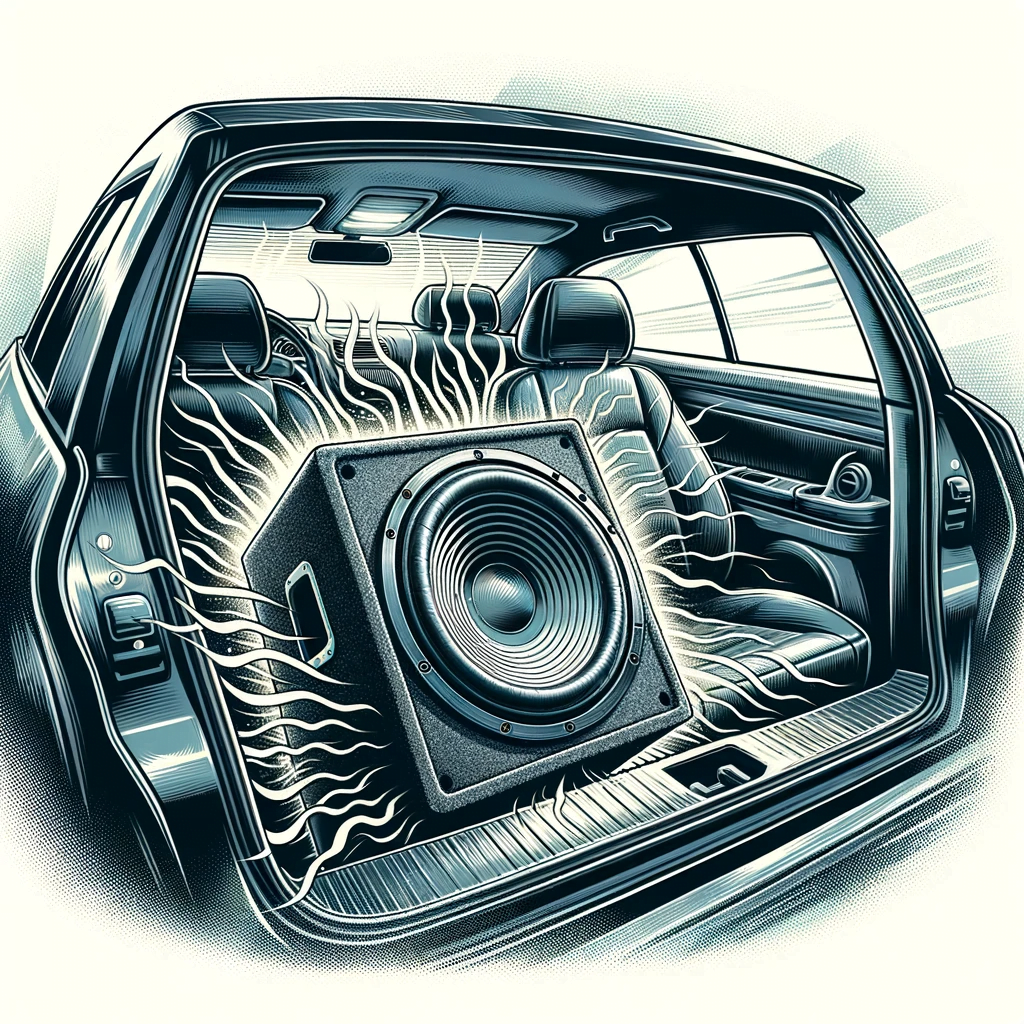
Exploring Sound Pressure Levels
Complete Guide to SPL Measurement, Safety Standards, and Measurement Technology
SPL dB Professional Measurement Precision Audio Analysis Learning CenterSubwoofer Fundamentals Hub
Sound Pressure Levels Guide
Sound Pressure Level (SPL) measurement has moved from dedicated meters to digital analysis, phone-based tools and real-time acoustic modelling, which has changed how most people measure and optimise audio performance. This comprehensive guide explores modern SPL measurement techniques, safety standards, and practical applications in car audio systems.
How SPL Measurement Has Changed
Modern measurement systems integrate smartphone apps, professional-grade sensors, and cloud-based analysis to provide real-time SPL monitoring with unprecedented accuracy and convenience.
Understanding Sound Pressure Levels
What is Sound Pressure Level?
Sound Pressure Level (SPL) measures the intensity of sound waves as variations in air pressure, expressed in decibels (dB). It quantifies how much acoustic pressure deviates from the baseline atmospheric pressure, providing a standardized way to measure and compare sound intensity across different sources and environments.
Reference Point: 0 dB SPL = 20 micropascals (threshold of human hearing)
Decibel Scale Properties
-
Logarithmic Scale: Each 10dB increase represents 10x more acoustic power -
Perceptual Doubling: Roughly 10dB increase perceived as “twice as loud” -
Distance Law: SPL decreases 6dB for every doubling of distance -
Frequency Dependent: Human ear sensitivity varies across frequencies
Common SPL Reference Levels
SPL Measurement Technology
Smartphone Integration
- • Professional-grade measurement apps
- • Calibrated microphone accessories
- • Real-time frequency analysis
- • Cloud data synchronization
- • GPS-tagged measurements
AI-Powered Analysis
- • Machine learning optimization
- • Automatic noise filtering
- • Pattern recognition algorithms
- • Predictive acoustic modeling
- • Intelligent measurement recommendations
Wireless Systems
- • Multi-point measurement networks
- • Bluetooth/WiFi connectivity
- • Remote monitoring capabilities
- • Synchronized measurement arrays
- • Real-time data streaming
Professional vs Consumer Technology
While consumer smartphone apps provide convenient SPL estimates, professional car audio optimization requires calibrated measurement equipment with ±0.5dB accuracy for precise system tuning and performance validation.
Professional SPL Measurement Equipment
| Equipment Type | Accuracy | Frequency Range | Applications | Price Range |
|---|---|---|---|---|
| Consumer Smartphone Apps | ±3-5 dB | 20Hz-20kHz | General monitoring, basic estimates | Free-$50 |
| Professional Sound Level Meters | ±0.5-1 dB | 10Hz-40kHz | Car audio tuning, system optimization | $500-2,000 |
| Laboratory-Grade Systems | ±0.1-0.3 dB | 1Hz-100kHz | Product development, research | $5,000-25,000 |
| Real-Time Analysis Systems | ±0.2-0.5 dB | 5Hz-80kHz | Live tuning, performance monitoring | $2,000-10,000 |
Measurement Standards
- IEC 61672: Sound level meter international standard
- ANSI S1.4: American National Standard specification
- Class 1: Precision instruments (±0.7dB, laboratory use)
- Class 2: General purpose (±1.0dB, field measurements)
- Weighting Filters: A, C, Z frequency response curves
- Time Constants: Fast (125ms), Slow (1s), Impulse (35ms)
Calibration Requirements
- Before Each Use: 1kHz calibrator verification
- Quarterly: Multi-frequency calibration check
- Annual: NIST traceable laboratory calibration
- Environmental: Temperature/humidity compensation
- Microphone: Frequency response verification
- Documentation: Calibration certificate maintenance
Safety Standards and Hearing Protection
Critical Safety Warning
Prolonged exposure to high SPL can cause permanent hearing damage. Understanding exposure limits and using proper hearing protection is essential for car audio enthusiasts and professionals.
OSHA Exposure Limits (8-Hour TWA)
85 dBSafe exposure limit 90 dB
Action level – monitoring required 100 dB
15 minute maximum exposure 115 dB
Immediate danger level
Car Audio SPL Context
-
Normal Listening: 70-85 dB SPL (comfortable levels) -
Enthusiast Systems: 90-110 dB SPL (short duration) -
Competition Systems: 130-170+ dB SPL (extreme levels) -
Hearing Protection: Required above 85 dB continuous exposure
Hearing Protection Recommendations
Earplugs
15-30 dB reduction, comfortable for extended use
Earmuffs
20-35 dB reduction, better for intermittent use
Electronic
Variable reduction, communication capability
SPL in Car Audio Applications
System Optimization Uses
Amplifier Gain Setting
Use SPL measurement to set optimal gain levels, preventing distortion while maximizing clean output power.
Crossover Tuning
Measure frequency response to optimize crossover points and ensure smooth transitions between speakers.
Subwoofer Placement
Test different positions to find optimal bass response and eliminate cancellation nodes.
Performance Validation
Power Output Verification
Confirm amplifier and speaker performance matches specifications under real-world conditions.
System Balance
Ensure proper SPL balance between front, rear, and subwoofer channels for optimal soundstage.
Distortion Detection
Identify clipping, thermal compression, and mechanical limitations before damage occurs.
Professional SPL Measurement Matters
Accurate SPL measurement is the foundation of professional car audio system optimization, ensuring optimal performance while protecting your investment and hearing.
±0.5dB Professional Accuracy 10Hz-40kHz Full Range Analysis Real-Time Instant Feedback
Proline-X SPL Engineering Excellence
Where the Numbers Come From
Proline X enclosures are solved from the driver maker's published Thiele-Small parameters, and each datasheet carries the modelled response for that driver in that cabinet rather than a measured SPL figure from a test chamber.
Performance Validation
Modelling the net volume, port tuning and driver excursion together is what makes the response predictable, and CNC cutting is what makes it repeat from one enclosure to the next.
Quality Assurance
Each datasheet lists the net volume, the tuning where the enclosure is ported, and the modelled response panel for that build. Warranty terms are listed per series on the product page.
Proline-X SPL Advantages
-
Published performance: the modelled response curve for that driver in that cabinet -
Optimal Efficiency: Maximum SPL per watt of amplifier power -
Distortion Control: Clean output even at high SPL levels
-
Thermal Management: Sustained performance without compression -
Vehicle Integration: Optimized for automotive acoustic environments -
Professional Support: Technical assistance for optimal SPL setup
Expand Your SPL Knowledge
SPL measurement connects to many aspects of subwoofer system design and installation. Explore these related topics to develop comprehensive expertise in car audio optimization.
Engineering Hub
- • Enclosure Volume Calculations – How volume affects SPL output
- • Port Tuning Frequency – SPL optimization through proper tuning
- • Sealed vs Ported Design – SPL characteristics of different enclosure types
- • Internal Bracing Effects – Reducing resonance for cleaner SPL
Installation Hub
- • Subwoofer Placement Optimization – Using SPL to find ideal locations
- • Amplifier Gain Setting – SPL-based calibration techniques
- • Room Acoustic Treatment – Managing reflections affecting SPL
- • System Integration – Balancing SPL across all components
Related Fundamentals Topics
Ready for Professional SPL Performance?
Experience the AudioIntensity difference with Proline-X engineered enclosures designed for optimal SPL output and pristine sound quality.
Premium Performance
Published modelled SPL behaviour, with CNC-cut Langboard Elite MDF construction.
Expert Support
Technical assistance for optimal SPL setup and system integration from audio professionals.
Warranty
Warranty terms are listed by series on each product page.
Shop Proline-X Enclosures
Key SPL Measurement Takeaways
Essential Knowledge
-
SPL is logarithmic – small dB changes represent significant power differences -
Professional measurement accuracy requires calibrated equipment -
Hearing protection is essential above 85 dB continuous exposure -
Current tools integrate smartphone connectivity and automated analysis
Practical Applications
-
Use SPL measurement for amplifier gain setting and system optimization -
Validate system performance against manufacturer specifications -
Identify optimal subwoofer placement through SPL mapping -
Professional solutions provide predictable, repeatable results
Master SPL Measurement for Professional Results
Understanding SPL measurement principles and safety standards is essential for optimizing car audio systems while protecting your hearing. Combined with professionally engineered Proline-X enclosures, proper SPL measurement ensures you achieve the best possible performance from your investment.
Explore Professional Solutions
Continue Learning Journey
Related Proline X models
An enclosure's alignment and net volume affect how efficiently a driver converts power into SPL. See the P10-P single 10" ported enclosure, the P12-P single 12" ported enclosure, and the full Performance Series lineup.